

vintage grace
step inside the ultimate girl world!!!!

Hey fam and welcome back to dumb rich! I hope everyone has been having a great week! Since we last spoke (which was earlier this week btw), there hasn’t been a lot to catch up on.
Today I have a fun event for NYFW and obviously tonight we’ll have a new episode of TSITP. I really hope they give us more than that fucking nothing burger from last week. I think we’ll do the music budget breakdown soon — I am just calling in my industry experts!!
NYFW feels like the perfect time to share one of the most fashionable people/places in girl world. A very cool mutual friend (let’s see if she reads the blog) connected me with Chandler Guttersen, who writes the incredible Substack The Vault By Chandler and is the founder of Vintage Grace. This was basically my ultimate girl world dream come true.
Vintage Grace has THE most beautifully curated selection of vintage finds. I was already freaking out over the space itself, and then every single piece Chandler pulled was somehow more amazing than the last. To make matters worse (for me, not for her), she was also incredibly kind and knowledgeable. Honestly, it feels unfair that someone can be all the things and have the world’s best closet—but whatever.
Meanwhile, my TikTok (obviously highly curated) keeps reminding me that Chanel quality is slipping, dupes are nearly impossible to spot, and tariffs are making luxury goods harder to afford. So… is vintage actually the smarter play? Chandler and I spent a lot of time talking about the real benefits of buying vintage (beyond just the cool factor) and how to properly care for these pieces you’re investing in. Let’s get into it!
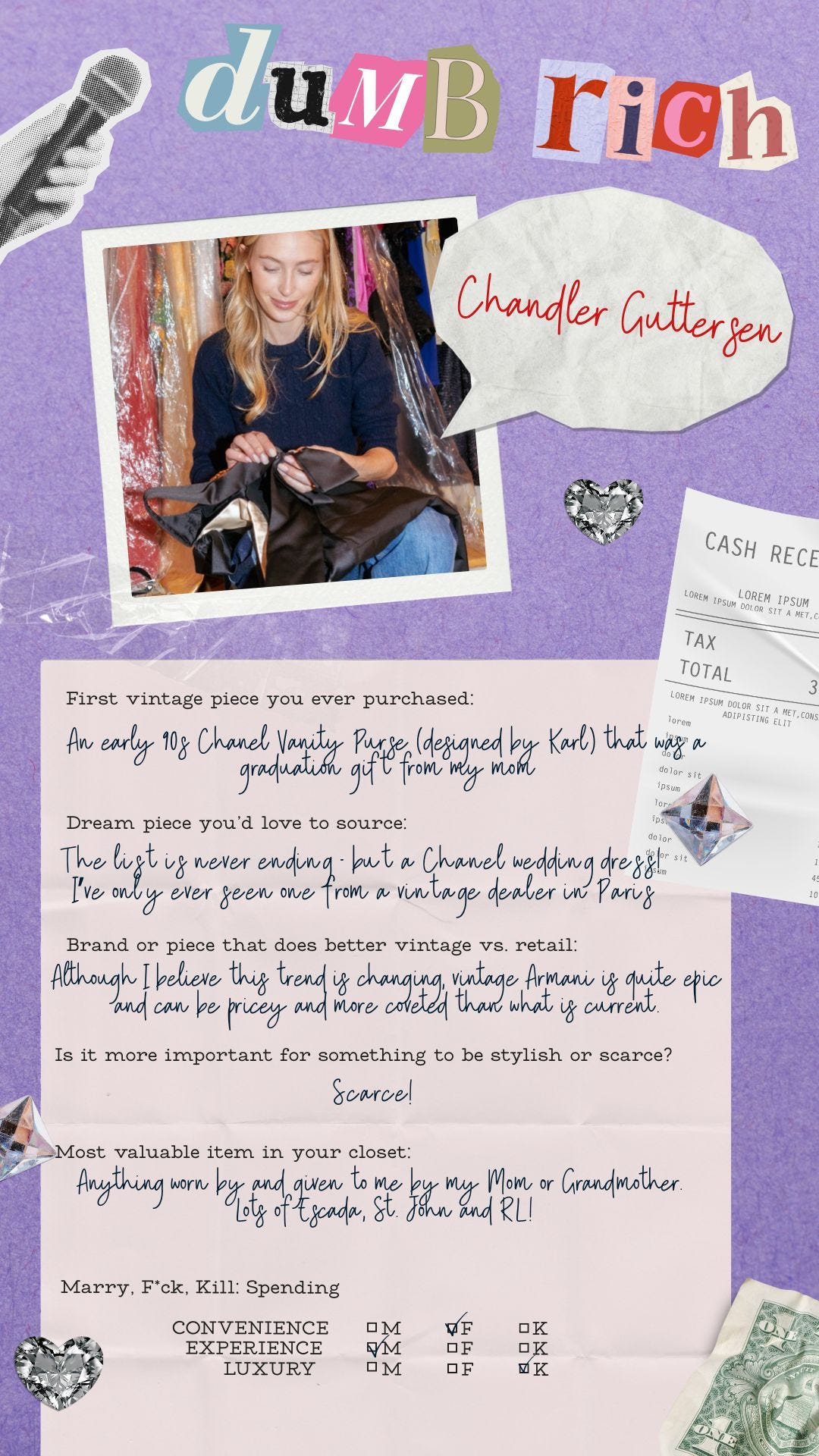
Ariel LaFond (AL - me!): Please describe Vintage Grace and how you got started in the vintage world!
Chandler Guttersen (CG): I fell in love with vintage before I ever thought it could become my life’s work. I’ve always been drawn to clothes with history, pieces that were made with care and carry the spirit of another time. I still remember obsessing over pieces of my mother’s or grandmother’s that instilled a spark in me at a young age.
For a while I followed the traditional path, working in corporate fashion at Gucci and Bottega Veneta. I learned a lot about the business, but I also saw how quickly stories can get lost in the churn of retail. During that time my former boss and mentor, Lisa Pomerantz, encouraged me to lean into what I truly loved most: vintage. She helped me realize that collecting wasn’t a distraction, it was a direction.
That push gave me the confidence to create Vintage Grace. Vintage Grace is my archive and showroom, but it’s also a reflection of my personal story. I started small, curating pieces that spoke to me because they carried history, craftsmanship and a sense of soul that modern clothes often lack. What began as a personal passion turned into something larger, an archive of rare and beautiful pieces that tell their own stories. For me it has never been just about selling clothes. It is about preserving fashion history, celebrating craftsmanship and sharing the feeling of discovery with people who want more than what they find in stores today.
AL: How do you decide what to purchase? Are you shopping for your own personal taste? Trends? Profit potential?
CG: I don’t shop for trends. I’ve always been more interested in timelessness than in what’s “in” for a season. For me, it comes down to personal taste and craftsmanship. I look for pieces that are well made, that carry a sense of history and character you can feel the moment you put them on.
I always say Vintage Grace is an extension of my own closet. Everything I source is something I would wear myself, and that’s the standard I hold. If I wouldn’t personally be excited to live with a piece, it doesn’t belong in the archive. That approach keeps the collection true to my eye and ensures that every garment feels special, not just saleable.
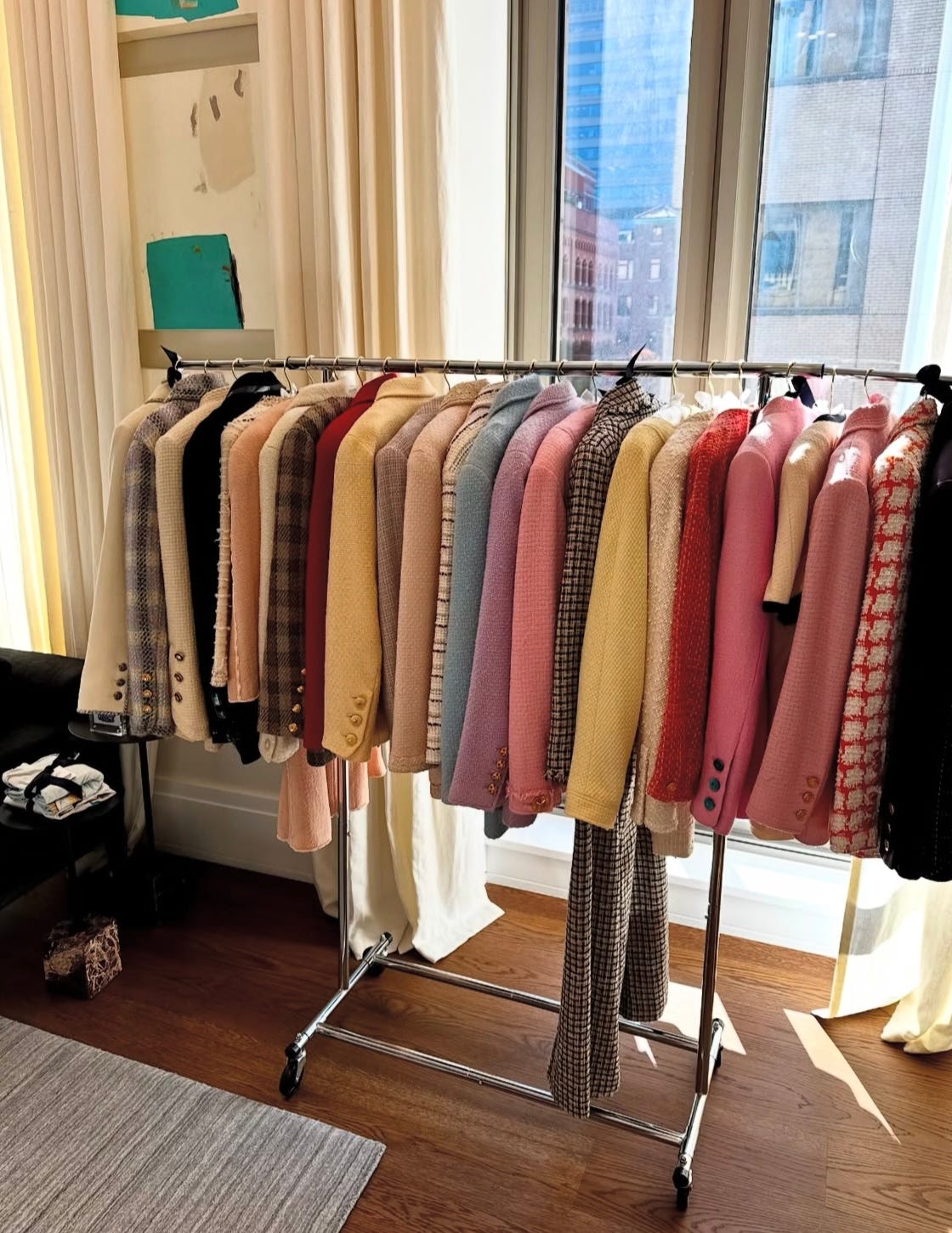
AL: I'm seriously disturbed by TikTok telling me True Religion jeans are vintage because now I feel ANCIENT. What decides if something is "vintage"? Time? Trends? TikTok?
CG: The word “vintage” gets used loosely, but in fashion there are some general guidelines people agree on.
Vintage usually means a piece is around twenty years old or more. Right now that even includes early 2000s fashion, which feels wild to say out loud. But for me, age alone isn’t enough. What really makes something vintage is the quality and the spirit of the era it came from. A 90s Prada slip dress or a 70s Saint Laurent blouse carries the essence of its time in a way that you can feel as soon as you put it on.
Anything over a hundred years is often called antique, while retro usually refers to newer pieces that imitate an older style. But when I talk about vintage, I’m thinking about clothes that are well made, true to their moment, and still feel alive today.
AL: Do you think there are any benefits to investing in vintage over purchasing new? Return on investment? Quality?
CG: Absolutely. Investing in vintage has benefits that go beyond just adding something beautiful to your closet.
One of the biggest differences is quality. So much vintage was made with construction and fabrics that are harder to find in new clothes today. When you buy a vintage Dior suit or a Ralph Lauren jacket from the 80s or 90s, you’re getting craftsmanship that was built to last. Those pieces often outlive trends and hold up better over time.
There’s also the return on investment. Certain vintage pieces not only hold their value but actually appreciate. Think about classic Chanel jackets, Hermès bags or rare archival runway pieces. As they become harder to find, the demand goes up, and that makes them a smarter long-term purchase than something brand new that will start losing value the moment you walk out of the store.
And then there’s the intangible side. Vintage gives you something unique. You’re wearing a piece of fashion history that tells a story, not just something off a rack that hundreds of other people own. That kind of individuality can’t be bought new.
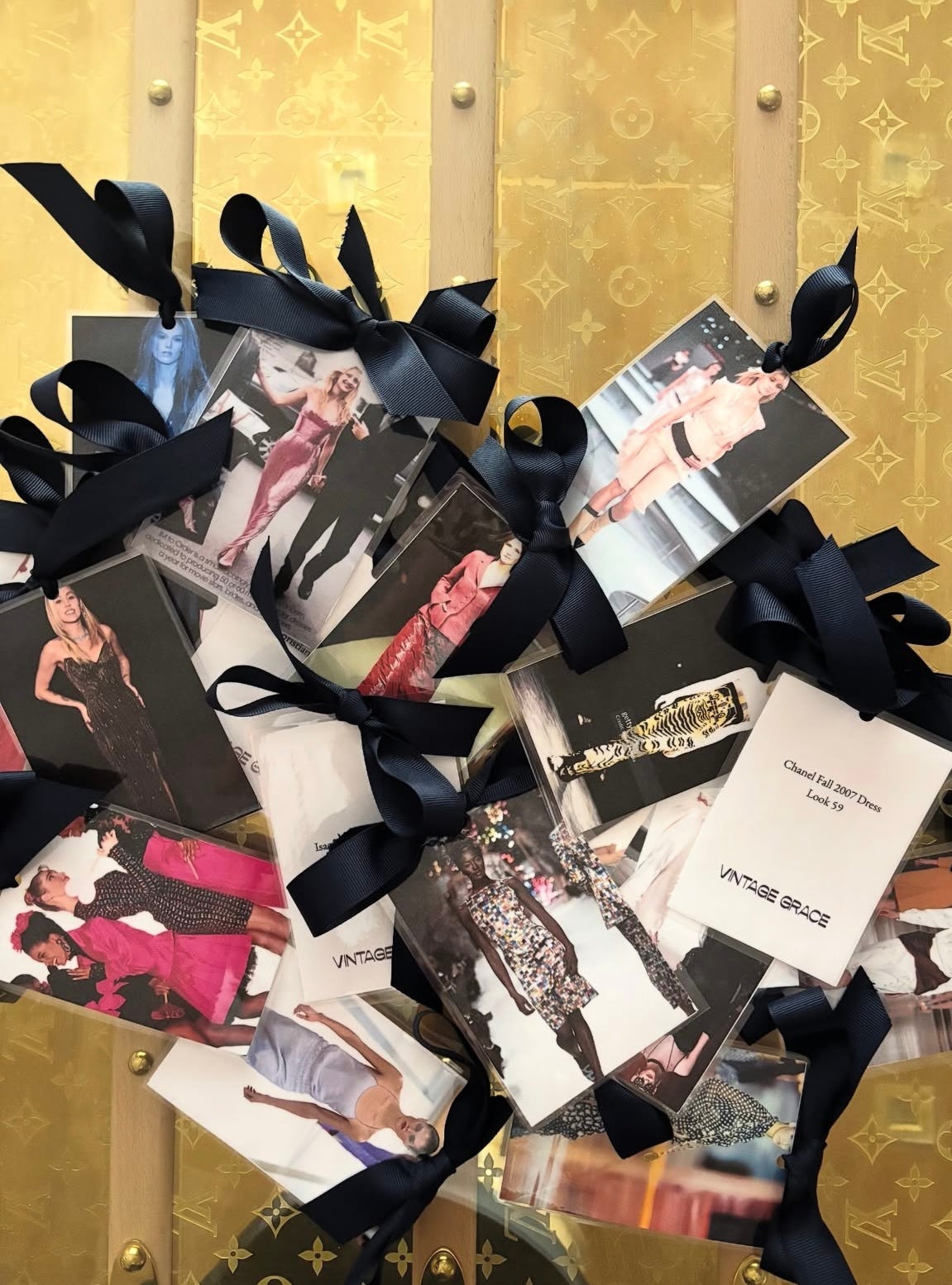
AL: When purchasing vintage, clients are investing in a special, rare piece. What are the best ways to care for these items?
CG: When clients purchase vintage, they’re not just buying clothes, they’re investing in a rare piece of history. Caring for those items is what keeps them alive for the next chapter. I always recommend dry cleaning as little as possible. Spot cleaning is best for everyday upkeep, and then take it to a trusted cleaner at the end of the season or after heavier wear.
How you store pieces makes a huge difference. Knits should always be folded rather than hung, since hanging stretches them out over time. For anything else, wooden hangers are the most supportive—I just made the switch in my showroom from velvet hangers, which are fine if you’re short on space but not ideal long-term. Truly rare or delicate pieces are often safest in archival grade boxes with acid-free tissue paper, which prevents chemicals from transferring onto fabrics.
And finally, avoid plastic garment bags. Clothes need to breathe, so always use a cotton or other breathable fabric cover to protect them while still allowing airflow.
*While I say these tips are for vintage pieces, they can certainly be (and should be) applied to new clothing as well!
AL: Are we all totally afraid of dupes and does this increase the vintage value?
CG: I wouldn’t say we are all afraid of dupes, but they have definitely changed the way people look at both luxury and vintage. On one hand, the rise of high quality fakes makes buyers more cautious because no one wants to invest in something that isn’t authentic. That caution can actually increase the value of vintage because when you know a piece is real and traceable it becomes even more desirable.
Dupes also push people toward vintage because vintage has built in proof. The construction, the labels, the wear, and the history are all details that are much harder to fake convincingly. A Chanel jacket from the 80s or a Prada dress from the 90s is not just about the logo. It is about craftsmanship that cannot be replicated with a copy.
It is also important to save receipts, tags, or any original identifiers from your purchases. These details create a record of authenticity that travels with the piece and can make a major difference in preserving its value over time.
So while dupes can feel intimidating, they also make vintage feel safer and more valuable. People trust pieces with a past, especially when they come from a source that knows how to authenticate and preserve them.
Okay I may or may not have purchased a few pieces from Vintage Grace… more to come on that!! In the meantime - I highly suggest you check out Chandler’s Substack, The Vault By Chandler, and the Vintage Grace website and Instagram. But seriously with caution because your wallet may never forgive you.
Quick housekeeping - I usually hate everything about Instagram but the AMAs have been SO fun so we’ll continue to do them on Monday! And if people submit longer scenarios I’ll answer them in a bonus letter. Yay! You can DM them to me on Instagram or email me at hello@ariellafond.com. Always anon. PLEASE send me gossip about who hasn’t paid you back for brunch but is posting about their weekend on a boat :D :D :D
Chat next week xoxoxoxo
Perfect collab
Honored to be featured! Thank you for your kind words 😘😘😘